Blog · Updated
Is Miniso Japanese? The truth about where Miniso is from
Miniso is Chinese, not Japanese or Korean. Its logo, where its products come from, why it is so cheap, if it is any good, and how it differs from Uniqlo.
By Brandzaar Research · First published 12 July 2017
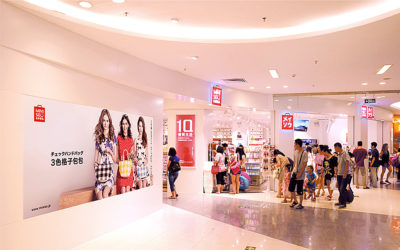
Is Miniso Japanese?
No. Miniso is a Chinese company, founded in Guangzhou in 2013 by Ye Guofu, who still runs it. It used Japanese-style branding for years, apologised for it in August 2022 and finished removing it in 2023.
For most of its first decade, Miniso looked and sounded Japanese, and millions of shoppers worldwide believed it was.
Is Miniso Korean?
No. Miniso is Chinese, not Korean. It is often confused with Korean-styled variety chains such as Mumuso and Yoyoso, which are separate Chinese companies. See the copycat chains below →
We first published this investigation in 2017, when Miniso had around 1,600 stores and was still marketing itself as a Japanese brand. This updated version (November 2026) adds what has happened since, including Miniso’s own admission that its Japanese positioning was wrong.
Miniso logo
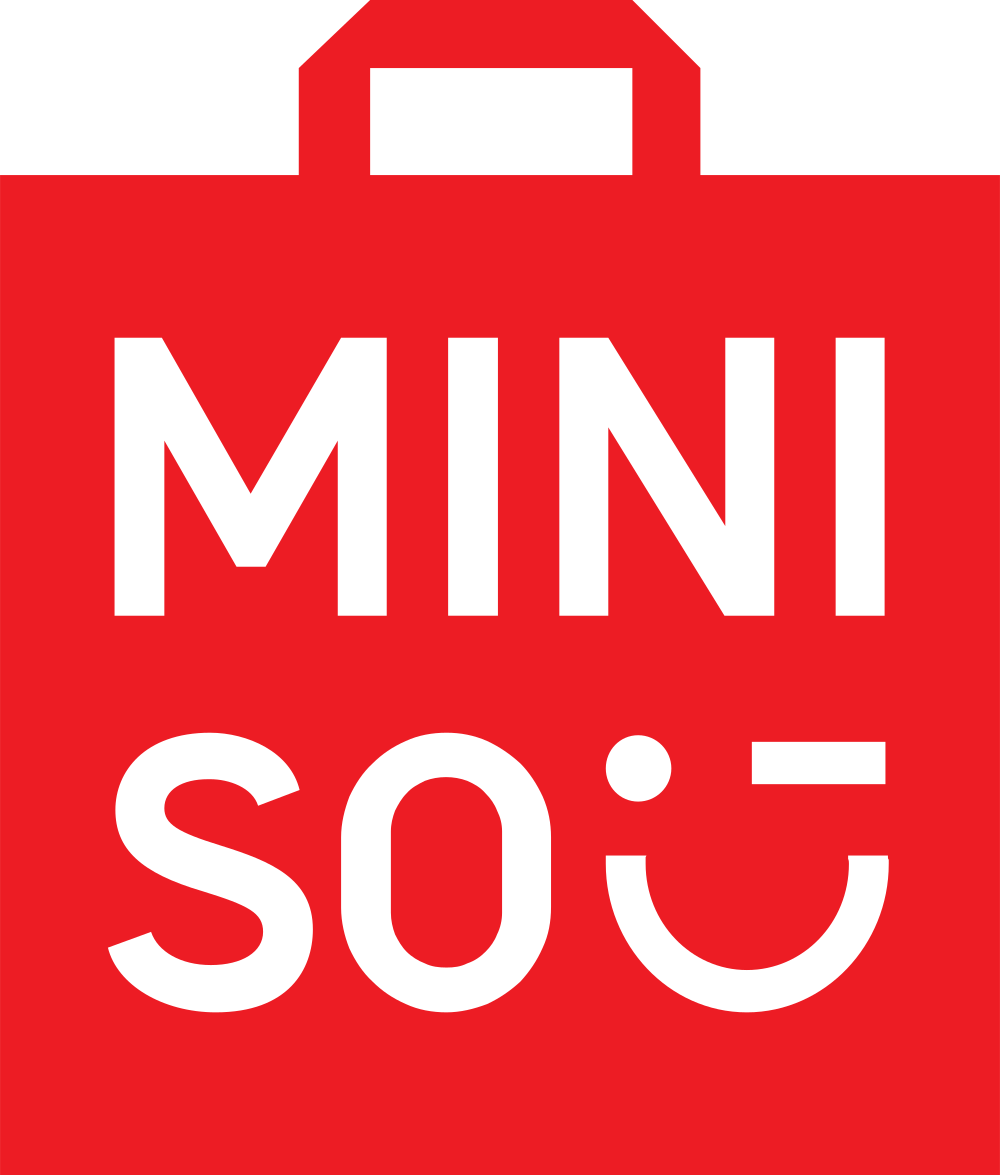
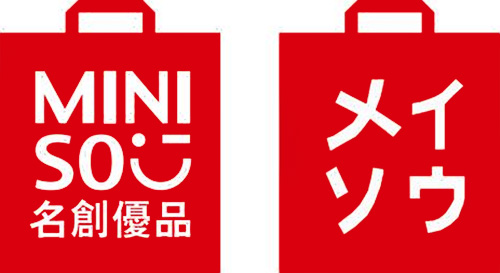
Miniso’s logo is a red shopping bag with a handle, carrying the MINISO name in white capitals over two lines and a winking face beside the “SO”. An earlier version, dated 2017 on Wikimedia Commons, also carried the Chinese name 名創優品 under the wordmark; the current version, which Commons sources to Miniso’s 2023 annual report, drops it. In February 2023, six months after its apology for its Japanese positioning, Miniso made the “Wink” its brand symbol, saying it had always been part of the logo.
Miniso at a glance
- Country of origin: China
- Founded: 2013, Guangzhou
- Founder, chairman and CEO: Ye Guofu
- Listed: New York Stock Exchange (MNSO) since 2020, Hong Kong (9896) since 2022
- Stores: 8,309 Miniso stores (4,665 in mainland China, 3,644 overseas) as of June 2026, plus 365 TOP TOY stores
- Markets: 113 countries and regions
See the full Miniso brand profile →
Why people think Miniso is Japanese
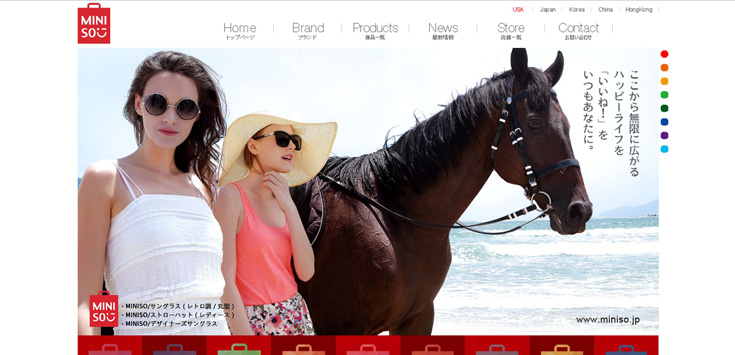
Miniso’s original branding borrowed heavily from Japanese retail:
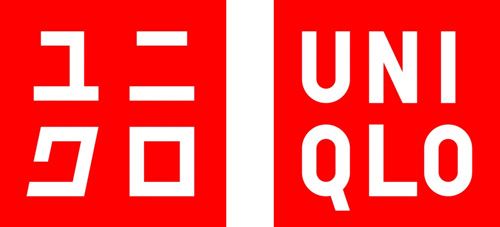
- The logo was a red box with white sans-serif lettering, very close in style to Uniqlo’s. Miniso added a small handle so it reads as a shopping bag.
- Packaging carried Japanese text, and many products had stickers saying “Designed by Japan”.
- The website had a Japanese-language version at miniso.jp.
- The store design, simple wooden fixtures and minimalist displays, echoed Muji and Daiso.
- A Japanese co-founder. Miniso promoted the designer Miyake Junya as co-founder. In 2022 the company said it had employed him as chief designer from 2015 to 2018, and that this had led it to market itself as a “Japanese designer brand”.
Miniso’s 2022 apology
Miniso began quietly stripping Japanese elements from its stores and packaging in 2019. In August 2022, after criticism in China, the company issued a public apology for its “wrong brand positioning”, acknowledged that it had marketed itself as Japanese, and described itself as a Chinese brand. It pledged to remove all remaining Japanese elements, and completed its rebrand in 2023.
Is Miniso the same as Uniqlo?
No. They are separate companies with different owners. Uniqlo is a Japanese clothing brand owned by Fast Retailing. Miniso is a Chinese variety retailer founded in Guangzhou by Ye Guofu.
- Uniqlo sells clothing. Its first store opened in Hiroshima, Japan, in June 1984, and its parent company has been called Fast Retailing since 1991.
- Miniso sells low-priced homeware, beauty products, toys and gifts. It opened its first store in China in 2013 and has its head office in Guangzhou.
- Why people mix them up. Miniso’s early red-and-white logo looked like Uniqlo’s, and its early marketing leaned on Japanese design. It promoted the Japanese designer Miyake Junya as a co-founder, and in 2022 said it had hired him as chief designer from 2015 to 2018.
En español: no, Miniso y Uniqlo no son la misma empresa. Uniqlo es una marca japonesa de Fast Retailing; Miniso es una empresa china de Guangzhou.
What we found in 2017: “Designed by Japan”, made in China
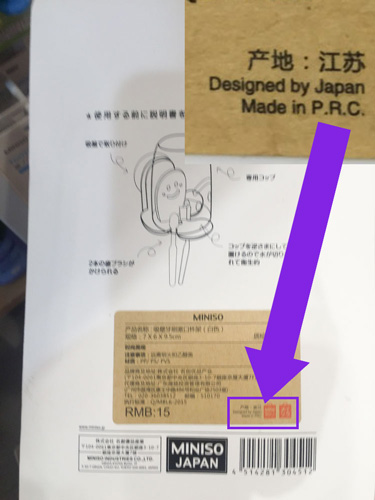
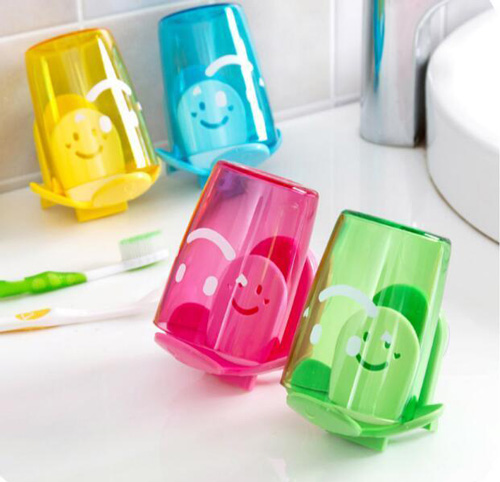
In 2017 we bought a Miniso toothbrush holder and mug set. The packaging was printed in Japanese and English, and the label on the back read “Designed by Japan / Made in P.R.C.”, with the place of production given as Jiangsu province.
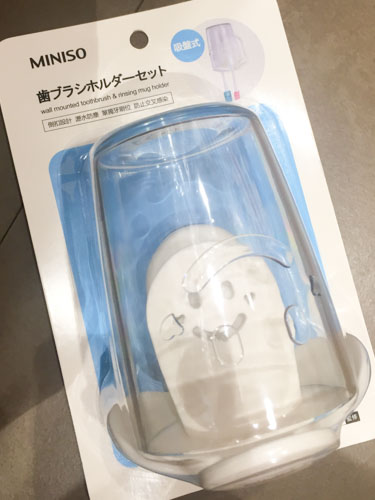
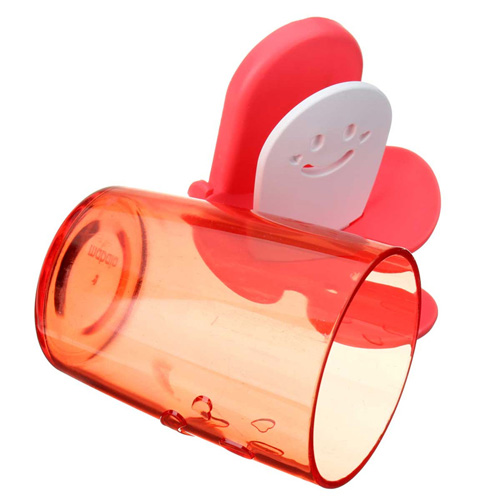
A quick search found what looked like the same smiley-face toothbrush holder for sale on AliExpress, on the Chinese wholesale site 1688.com and on eBay, under other brand names or none at all. That suggested at least some Miniso products were factory catalogue items with Miniso packaging, not original designs.
Miniso’s own filings now describe its sourcing model clearly, as the next section shows.
Where does Miniso get its products?
Miniso buys its products from more than 2,000 third-party suppliers and says substantially all of them are made in China. It designs or co-designs most of what it sells, but it does not make anything itself: production is outsourced.
The details, from Miniso’s 2025 annual report (Form 20-F):
- Outsourced production. Miniso uses outside manufacturers, mainly under OEM and ODM arrangements. It is more involved in design with OEMs, and lets ODMs handle the design of more standard products.
- In-house design. At the end of 2025 it had an in-house team of over 300 designers, and it also works with independent design teams from places such as South Korea, Spain, the UK and the US.
- Off-the-shelf products are a small share. Products it buys without taking part in the design make up under 10% of sales in its mainland China stores.
- No dominant supplier. No single supplier provided more than 10% of its purchases in 2025. Supplier agreements usually run for two years.
That fits what we saw in 2017, when at least one Miniso product appeared to be a factory catalogue item with Miniso packaging.
Why is Miniso so cheap?
Miniso keeps prices low through scale and its store model. It buys in large volumes from more than 2,000 suppliers, outsources manufacturing, and lets Retail Partners pay to open and run most of its stores.
Miniso’s prices come from its business model rather than from cutting corners on any one product. The details, from its 2025 annual report:
- Scale buying. Miniso says its cost advantage comes from China’s large supply chain, its large purchase volumes, paying suppliers on time, and a digitised supply chain.
- Partner-funded stores. Under its “Retail Partner” model, partners pay the cost of opening and running Miniso stores. Miniso keeps ownership of the stock until it is sold, and takes a pre-agreed share of in-store sales. At the end of 2025, 4,522 of its 4,568 mainland China stores ran this way. Overseas, most stores (2,451 of 3,583) were run by local distributors.
- Fast turnover. It launched around 1,600 new Miniso products (SKUs) a month in 2025. A constantly changing range brings customers back to see what’s new and keeps stock moving.
- Low development costs. Miniso lets ODM suppliers design many standard products, which keeps its own development costs down. Compare Muji, which designs and develops its products in-house and needs to sell them for longer to recover that investment. That is part of why Muji is more expensive.
Low prices do not mean thin margins for the company. Miniso Group reported a gross margin of 45.0% for 2025, against 44.9% in 2024.
Is Miniso a good brand?
It depends on what you want. Miniso is a large, fast-growing value retailer known for low-priced lifestyle, beauty and toy products, and for licensed goods from Disney, Sanrio and Universal. It has also had product-safety problems, including a 2025 public warning in Victoria, Australia, over button-battery labelling.
In its favour:
- Price. Miniso describes itself as “a global high-growth value retailer” and lists affordability among the reasons people shop there.
- Range. Its products fall into three groups: lifestyle, beauty and toys. The range changes constantly.
- Licensed characters. It sells co-branded products with IP owners such as Disney, Sanrio and Universal. These licences usually run for three years or less. It also has its own characters, such as Mini Family and YOYO.
- Growth. The number of Miniso stores rose from 5,791 in June 2023 to 8,151 at the end of 2025, and to 8,309 by June 2026.
Against it:
- Product safety. In October 2025, Consumer Affairs Victoria issued a public warning after inspectors found more than 400 items in Miniso stores, including toys, night lights and light-up key chains, that did not meet mandatory button-battery information standards. Follow-up inspections found items still on sale, and the regulator referred the matter to the ACCC. Miniso says it stopped selling the affected products, relabelled them and started a voluntary recall.
- Quality control. In its annual report, Miniso says it has “historically experienced product quality issues”, such as products not meeting the relevant specifications.
- Honesty in branding. For years Miniso presented itself as Japanese, which it has since admitted was wrong.
For safety-critical items such as children’s toys or anything with a button battery, check the warnings on the pack and your local recall notices.
The copycats: chains that copied Miniso
Miniso’s success quickly inspired imitators. By 2017 we had found several chains copying its name, logo and store format. Some presented themselves as Japanese; others switched to a Korean image, riding the popularity of K-pop and Korean beauty. Korean government agencies later stepped in: in 2018 KOTRA, Korea’s trade agency, said around 100 “fake Korean” shops had opened in Vietnam in two years, and Korea’s intellectual property office said Mumuso “just pretends to be Korean”.
Here is what we documented in 2017. Some of these chains have since closed or changed.
Mumuso
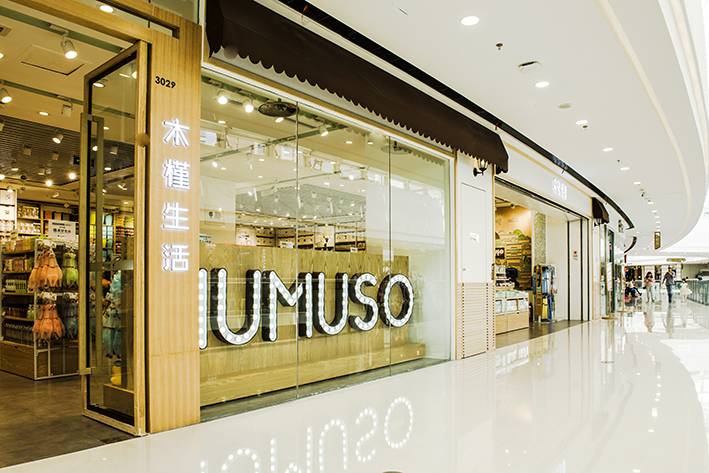
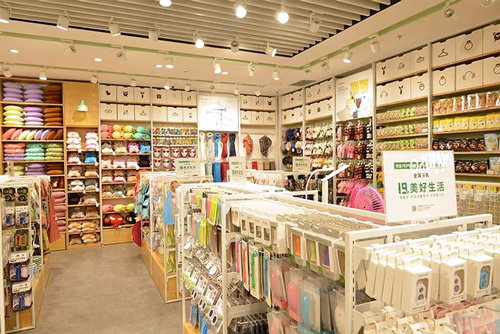
Mumuso (Chinese name 木槿生活) is a Chinese company founded in Shanghai in 2014, now headquartered in Hangzhou. Its stores have historically used “KR” in the logo and a Korean-style image. It is not connected to Miniso. Read the Mumuso profile →
Yoyoso
Yoyoso (韩尚优品) was founded in 2014 in Yiwu, Zhejiang, and uses Korean script prominently under its logo. Read the Yoyoso profile →
DaHeSo
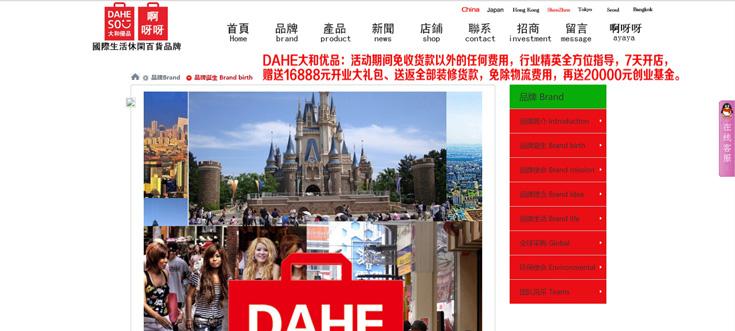
DaHeSo copied almost everything: a near-identical name, a red bag-shaped logo and a website layout modelled on Miniso’s, complete with Japanese imagery.
The 2358 Store
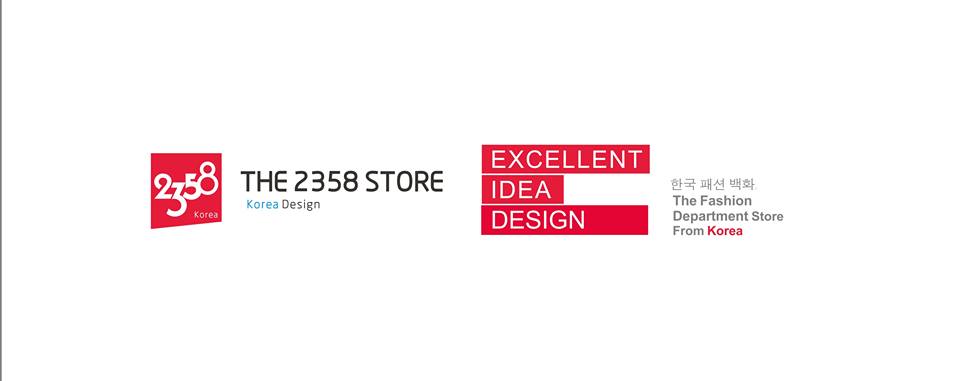
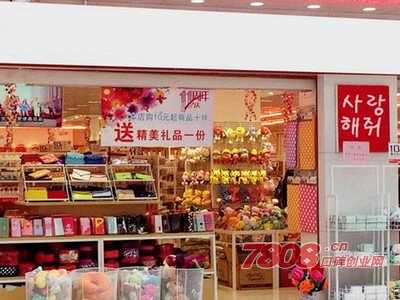
The 2358 Store marketed itself as “Korea Design” and “The Fashion Department Store From Korea”, with a red box logo in the Miniso mould.
Domesky
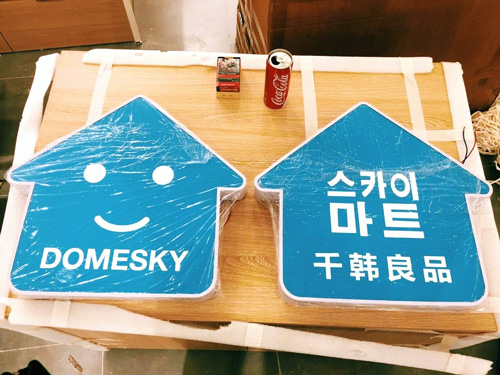
Domesky, which we found in Malaysia, used Korean-style branding.
XiMi Vaue (熙美诚品)
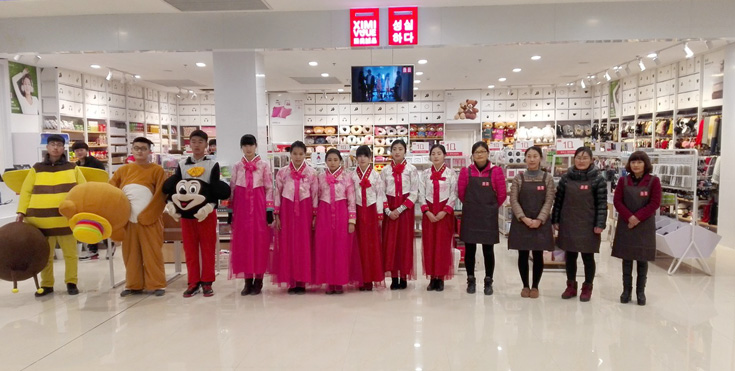
XiMi Vaue’s logo and name structure closely followed Miniso’s. At one store opening in China, staff wore Korean hanbok under Korean-language signage.
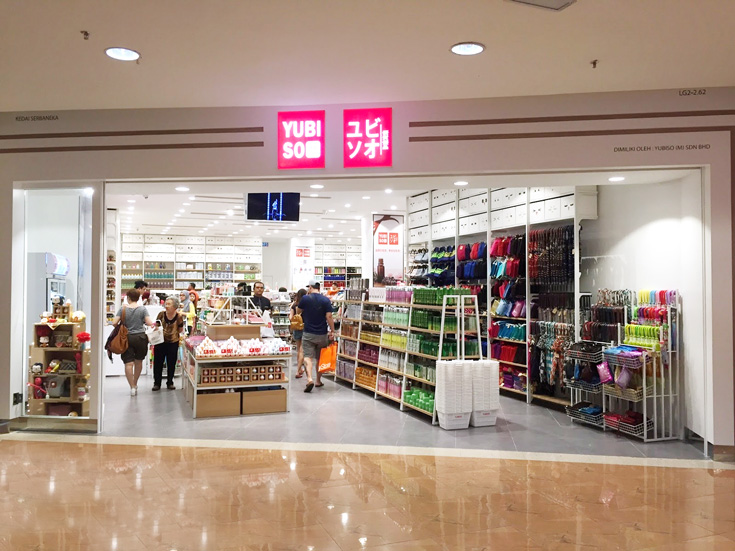
YuBiSo
YuBiSo, which we found in Malaysia, copied Miniso’s store layout and much of its product range, with Japanese katakana on its sign.
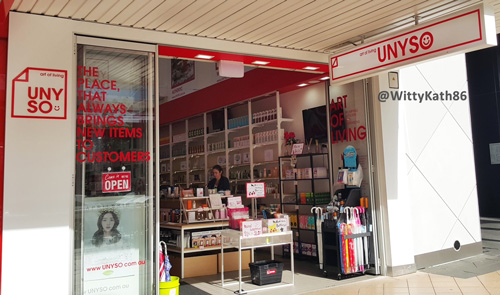
Unyso
Unyso was another Miniso-style chain with a Korean image. We found it in Chatswood, Sydney.
Brandzaar’s take
Miniso’s story is a lesson in how much a borrowed national image can be worth. Japanese design carries trust, and Miniso used that to grow faster than almost any retailer of its generation. But it also shows that the borrowed image was never the real asset. Since dropping the Japanese branding, Miniso has kept growing, from about 1,600 stores when we first wrote this to more than 8,300 today. The real strengths were always the supply chain, the fast-changing range and the partner-funded store model.
For entrepreneurs who want to bring a variety-store concept to a new country, Miniso now works mainly through distributors and partners overseas. Where Miniso is already established, its Japanese counterparts Daiso and Muji may be the less crowded opportunity. Talk to us about sole-agent opportunities.
Frequently asked questions
Is Miniso Japanese?
No. Miniso is a Chinese company, founded in Guangzhou in 2013 by Ye Guofu, who still runs it. It used Japanese-style branding for years, apologised for it in August 2022 and finished removing it in 2023.
Is Miniso Korean?
No. Miniso is Chinese, not Korean. It is often confused with Korean-styled variety chains such as Mumuso and Yoyoso, which are separate Chinese companies.
Who owns Miniso?
Miniso is run by MINISO Group Holding Limited, which is listed in New York (MNSO) and Hong Kong (9896). Founder Ye Guofu is chairman, CEO and controlling shareholder.
Is Miniso the same as Uniqlo?
No. They are separate companies with different owners. Uniqlo is a Japanese clothing brand owned by Fast Retailing. Miniso is a Chinese variety retailer founded in Guangzhou by Ye Guofu.
Where does Miniso get its products?
Miniso buys its products from more than 2,000 third-party suppliers and says substantially all of them are made in China. It designs or co-designs most of what it sells, but it does not make anything itself: production is outsourced.
Why is Miniso so cheap?
Miniso keeps prices low through scale and its store model. It buys in large volumes from more than 2,000 suppliers, outsources manufacturing, and lets Retail Partners pay to open and run most of its stores.
Is Miniso a good brand?
It depends on what you want. Miniso is a large, fast-growing value retailer known for low-priced lifestyle, beauty and toy products, and for licensed goods from Disney, Sanrio and Universal. It has also had product-safety problems, including a 2025 public warning in Victoria, Australia, over button-battery labelling.
Is Miniso an ethical brand?
On ethics, the main criticism has been about honesty in branding: for years Miniso presented itself as Japanese, which it has since admitted was wrong. Like most low-cost retailers, it relies on outsourced manufacturing, so shoppers who care about supply-chain standards should check its published sustainability reports.